



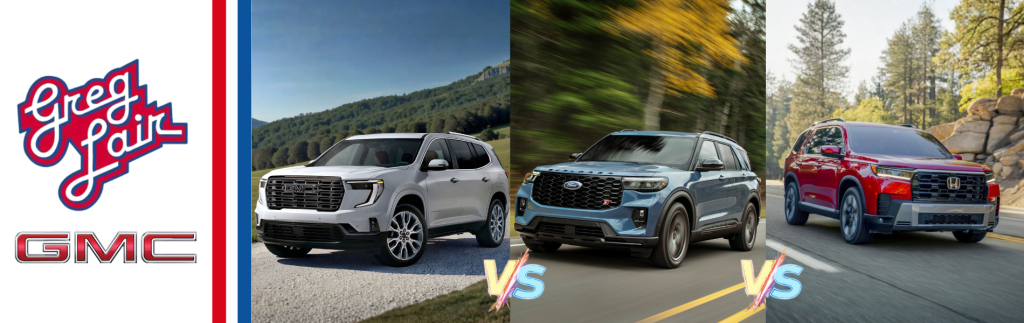
Shopping for a three-row SUV is one of those purchases that starts with browser tabs and ends with gut feelings. Before most families schedule a single test drive, they’ve already spent hours comparing cargo numbers, reading about third-row legroom, and wondering which vehicle will still feel right five years from now.
- Buyers tend to narrow their research to the same core questions: how many people fit comfortably, how much gear can go with them, and what they’ll spend at the pump.
- Among the most researched options in this segment are the 2025 GMC Acadia, Ford Explorer, and Honda Pilot, each with real tradeoffs worth understanding before you visit a showroom.
- Knowing the actual numbers ahead of time saves you from surprises and helps you ask smarter questions once you’re in the door.
Seating: How the Rows Actually Feel
Passenger capacity is usually where the research starts. All three vehicles offer three rows, but how those rows feel to actual adults varies more than the spec sheets suggest.
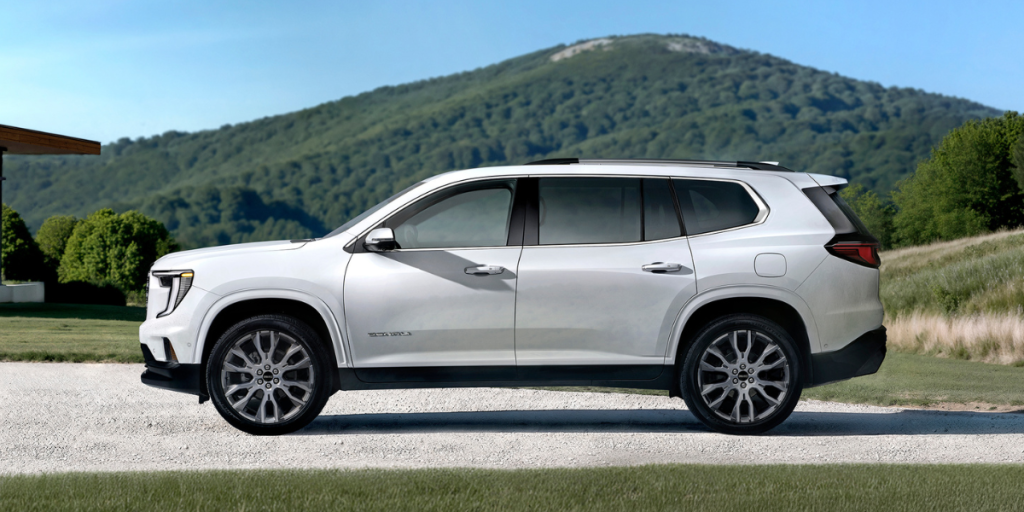
GMC’s Acadia seats up to eight with a bench second row, or seven with optional captain’s chairs. Second-row legroom measures 41.5 inches, and third-row legroom sits at 32.1 inches. Workable for older kids and shorter trips for most adults. Honda’s Pilot also reaches eight-passenger capacity in bench configuration, and its 32.5 inches of third-row legroom is nearly even with the Acadia.
Ford’s Explorer caps at seven passengers with its standard bench, or six with captain’s chairs. Its third row is fine for kids, but anyone who regularly carries adults back there should make a point to sit in it before signing anything.
Cargo Space Side by Side
This is where the Acadia separates itself in ways that actually matter on a family road trip. All numbers below come from each manufacturer’s official website.
| Metric | 2025 GMC Acadia | 2025 Ford Explorer | 2025 Honda Pilot |
|---|---|---|---|
| Max Seating | 8 (bench) / 7 (captains) | 7 (bench) / 6 (captains) | 8 (bench) / 7 (captains) |
| Cargo Behind 3rd Row | 23.0 cu ft | 16.3 cu ft | 18.6 cu ft |
| Cargo Behind 2nd Row | 57.3 cu ft | 46.0 cu ft | 48.5 cu ft |
| Max Cargo Space | 97.5 cu ft | 85.8 cu ft | ~87.0 cu ft |
| Horsepower | 328 hp (2.5L turbo) | 300 hp (2.3L base) | 285 hp (3.5L V6) |
| Hwy MPG (base drivetrain) | 27 mpg (FWD) | 28 mpg (RWD) | 27 mpg (FWD) |
| Max Towing | 5,000 lbs | 5,000 lbs | 5,000 lbs AWD / 3,500 lbs FWD |
| Standard Infotainment Screen | 15 inches | 13.2 inches | 9 inches (most trims) |
At 23.0 cubic feet behind the third row, the Acadia has a real-world advantage over the Explorer’s 16.3 and the Pilot’s 18.6. That nearly seven-cubic-foot gap over the Explorer is something you’ll feel the moment you try to load bags for a full family. Across all three cargo measurements, the Acadia holds the lead.
Technology Inside the Cabin
Screen size has become a genuine differentiator in this segment. Standard on every 2025 Acadia is a 15-inch infotainment touchscreen, one of the largest you’ll find in the class. It pairs with a Google-powered interface, wireless Apple CarPlay and Android Auto, and available Super Cruise hands-free highway driving. Families who regularly make long hauls tend to find Super Cruise one of the more practical available features going right now.
Ford’s Explorer runs a 13.2-inch touchscreen with Amazon Alexa and Google built-in, and BlueCruise hands-free driving is available on higher trims. Both are capable setups, but the Acadia’s screen is noticeably larger.
Honda’s Pilot uses a 9-inch center display on most trims, stepping to a 7-inch unit on the base Sport. It’s clean and intuitive, though it doesn’t match the screen real estate of the other two.
Power and Towing
All three can tow up to 5,000 pounds when properly equipped. One catch with the Pilot: front-wheel drive models drop to just 3,500 pounds. If trailering is on your list, that’s worth knowing before you fall in love with a FWD trim.
Under the hood, the Acadia’s 2.5-liter turbocharged four-cylinder puts out 328 horsepower and 326 lb-ft of torque. That outpaces the Explorer’s base 2.3-liter EcoBoost at 300 horsepower and the Pilot’s 3.5-liter V6 at 285 horsepower. Highway fuel economy is close across all three. Running front-wheel drive, the Acadia and Pilot both hit 27 mpg highway, while the Explorer reaches 28 mpg in rear-wheel drive.
Numbers Worth Taking Into the Showroom
Researching specs before you go doesn’t mean your decision is made. It means you walk in with the right questions. Third-row legroom that reads well on paper can feel different once you’ve sat in it. Cargo numbers tell part of the story, but so does how the seats fold, how flat they lay, and how easy the whole process is. Put it all together and the 2025 GMC Acadia covers a lot of ground in one package, and the specs back that up before you ever pull into a parking lot.
See the Acadia at Greg Lair Buick GMC
We carry the 2025 GMC Acadia at our dealership in Canyon, and our team is glad to walk you through the full lineup in person. Whether you’re coming in from Amarillo, Lubbock, or anywhere across the Texas Panhandle, we can help you compare trims, set up a test drive, and answer the questions that matter for your family’s situation. Every new Acadia purchase also comes with our Free Lifetime Powertrain Warranty at no extra cost. Browse our current inventory at greglair.com or stop by and experience the Greg Lair difference for yourself.
Connect with us


